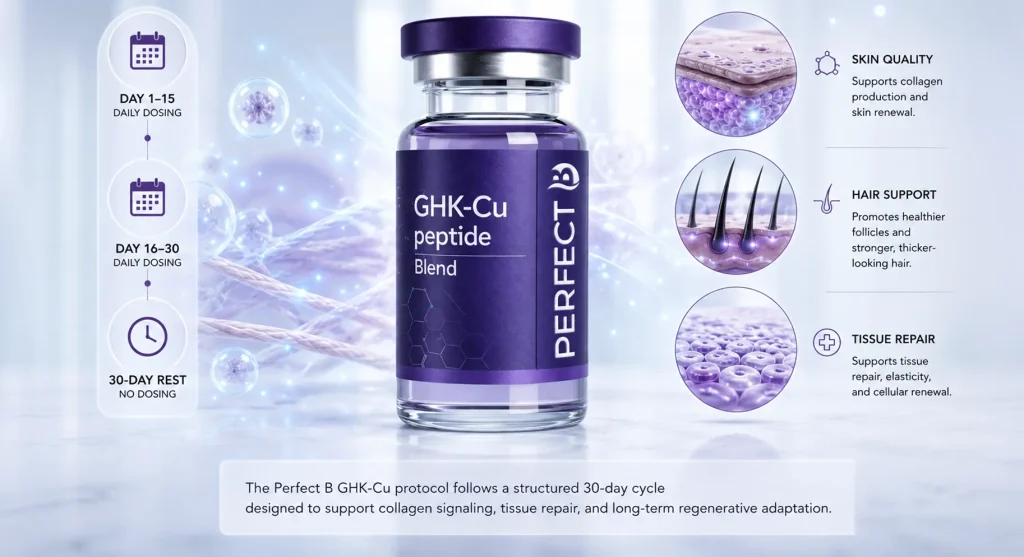
Preclinical research suggests GHK-Cu may support hair follicle health through multiple mechanisms, including stem cell activation, improved VEGF-driven blood supply, enlargement of follicle size, and possible 5-alpha reductase inhibition
Always consult licensed healthcare providers for personalized medical advice
The FDA specifically warned about peptide-related impurities and API characterization problems in other words, that whats in the vial might not be 100% pure BPC-157, and even if it is, the peptide could degrade or contain variants
Injectable GHK-Cu is not a safe or proven alternative to surgery for loose skin

~403 Da (copper complex) Form: Oral capsules Dosage per Capsule: 2mg Capsule Count: 60 capsules per bottle (120mg total) Purity: 99%+ verified by HPLC and mass spectrometry (See COAs) Research Background GHK-Cu has been investigated in research literature across several scientific contexts: Tissue biology research investigations into peptide-copper complex effects on cellular signaling pathways in tissue models Extracellular matrix research studies examining cellular responses involving collagen synthesis pathways and matrix protein regulation in cell culture systems Copper-binding peptide chemistry analytical chemistry research on GHKs selective copper binding properties and the cellular biology of copper homeostasis Cellular signaling pathway research investigations into GHK-Cus interactions with cellular receptor systems and downstream signaling cascades Gene expression research studies examining GHK-Cus effects on cellular gene expression patterns in research models Comparative peptide research analytical studies positioning GHK-Cu alongside other naturally occurring copper-binding peptides in cellular research contexts GHK-Cu is historically significant as one of the most extensively studied naturally occurring copper-binding peptides, originally identified by Pickart et al
GHK-Cu suppresses inflammation through multiple signaling pathway interventions, reducing production of pro-inflammatory cytokines like TNF-alpha and IL-6 while decreasing inflammatory cell infiltration into tissues